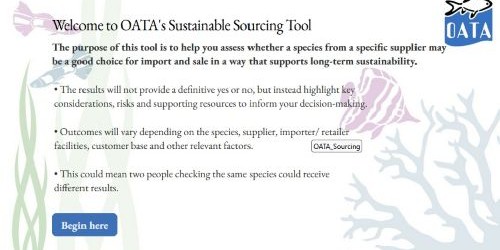
OATA has launched a free online tool to help the home aquarium industry make sustainable sourcing decisions when it comes to buying fish for their businesses.
The tool is aimed at businesses such as importers, wholesalers and retailers and will take them through a process that explores their understanding of how the fish they want to order were sourced, whether captive-reared or wild-collected.
The aim is to encourage businesses to think about the whole supply chain and explore areas they might not be sure about with their suppliers.
“We would encourage all businesses that buy fish – whether that’s to supply to retailers or retailers themselves – to start using the tool,” said Scientific and Technical Adviser Emily Maunder, who constructed the tool alongside a working group of OATA Board Directors.
“Businesses already do a lot of thinking about what livestock to buy for their business but this is a way of codifying that thinking into something that actively demonstrates their decision-making. OATA believes this will be an excellent way for the industry to demonstrate how it is already proactively self-regulating around issues regarding sourcing livestock.
“The tool guides users through questions on supply chains, animal welfare, biosecurity and conservation, taking into account the species, supplier, facilities and customer base. It will provide tailored advice, resources and recommendations, helping businesses assess potential risks and concerns before deciding whether to stock a particular species.
“The final decision to buy remains with the user unless the species have been subjected to harmful practices opposed by OATA, which include dyed, tattooed or genetically modified fish for example, and these will be flagged.”
At the moment, the Sustainable Sourcing Tool looks at both freshwater and marine fish species. OATA plans to widen the species scope to plants, corals and plants in the future. The tool sits alongside a range of other guidance and tools developed by OATA to help businesses maintain high standards.